Grand Unified Grammar of Graphics (GUGOG)
A Workshop at IEEE VIS 2026
Declarative, modular, and compositional approaches to visualization specification—collectively known as graphical or visualization grammars—have proliferated across visualization research and practice. However, despite sharing intellectual roots in Wilkinson’s Grammar of Graphics, these systems differ substantially in their abstractions, primitives, design goals, and target users.
GUGOG is a half-day hybrid workshop at IEEE VIS 2026 that brings together researchers and practitioners working on grammar-based visualization to seek a unified view of this diverse landscape. The workshop provides a dedicated forum for cross-system comparison, meta-theoretical reflection, community consensus building, and practitioner perspectives—structured opportunities that the main conference program rarely affords.
Read the full workshop proposal here.
GUGOG is held in conjunction with IEEE VIS 2026 and co-organized with the Munich Center for Machine Learning (MCML).
Panel: Towards a Universal Visualisation Language
Grammar-based systems all trace their lineage to Wilkinson’s Grammar of Graphics, yet they diverge sharply in their primitives, composition rules, design goals, and intended users. This panel asks the question that motivates the workshop: is a universal visualisation language a coherent goal, or does the diversity of grammars reflect genuine differences in what people need to express?
Panellists will draw on their own experience building and studying grammars and languages for visualisation to consider what a shared foundation would have to account for — interaction, computation and data access, diagrams beyond statistical charts, and the practicalities of learnability and adoption — and where unification would cost more than it gains. The discussion opens the landscape for the breakout sessions that follow in the afternoon.
Moderated by Cynthia Huang.
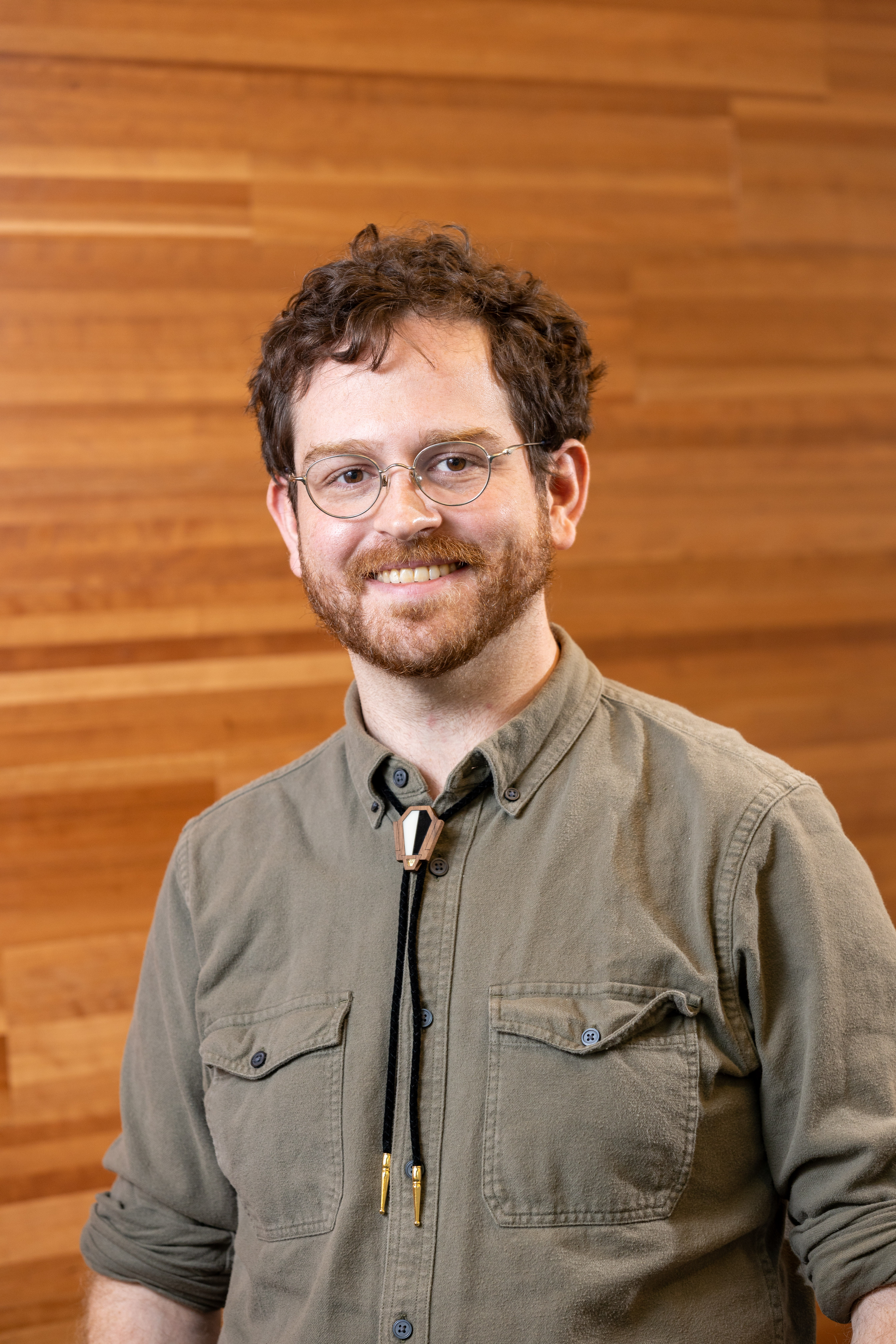
Andrew McNutt is currently an assistant professor of computer science at the University of Utah, and an incoming professor at the University of British Columbia. His group builds tools, develops theories, and conduct studies that turn domain expertise (such as for making charts) into software that is approachable, trustworthy, and respectful of user agency. The work spans HCI, visualization, and programming interfaces. He has won multiple paper awards at HCI and visualization venues, received the Johanna Beyer EuroVis Early Career Award, and was a Siebel Scholar. mcnutt.in
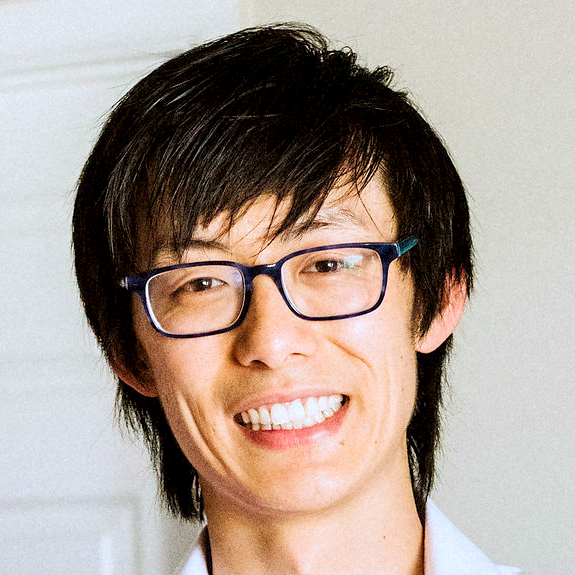
Eugene Wu is an associate professor of computer science at Columbia University and Co-director of the new Data, Agents, and Processes Lab (DAPLab). He is broadly interested in the foundations of computing infrastructure that are needed in a future where AI agents can safely, reliably, and efficiently automate complex work. His research spans the computing stack, from visualization and HCI to core data systems. Eugene has received the VLDB 2018 10-year test of time award, best-of-conference citations at ICDE and VLDB, the NSF CAREER, and Google, Adobe, and Amazon faculty awards. eugenewu.net
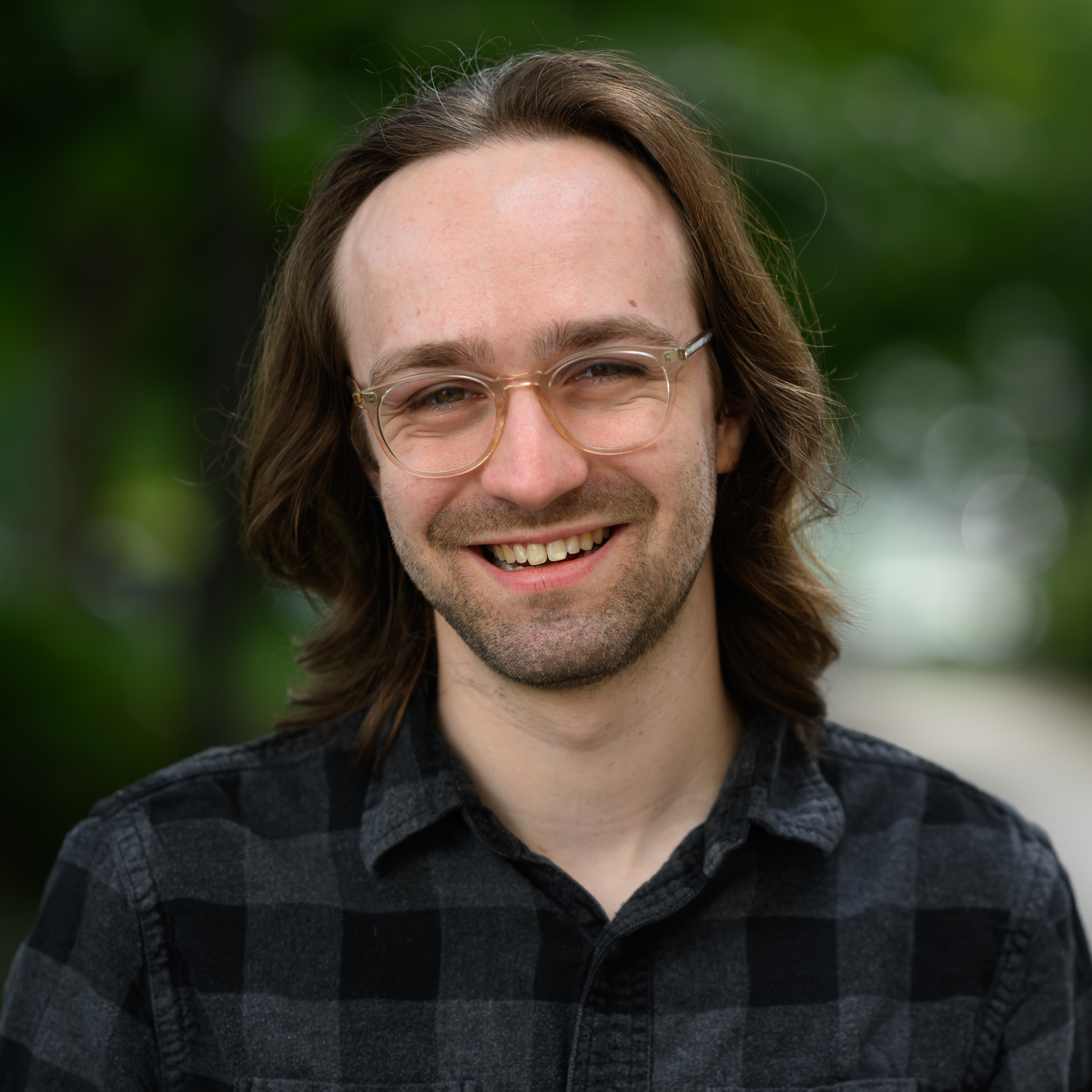
Josh Pollock is a recent PhD graduate from the VIS group at MIT, advised by Arvind Satyanarayan. His research applies programming language ideas to visualization grammars, with a particular focus on finding unifying abstractions across domains. Josh’s work starts with the hypothesis that there is a universal, extensible language for data-driven graphics analogous to the lambda calculus or relational algebra. His research systems include GoFish and Bluefish, which unify UI, chart, and diagram abstractions; Animated Vega-Lite, which unifies interaction and animation for charts; and Benthic, which unifies abstractions for chart and diagram accessibility. joshmpollock.com
Accepted Submissions
Seven short position papers were accepted. Five will be presented as talks; all seven camera-ready versions are available on the accepted submissions page.
Tentative Schedule
The workshop runs as a half-day hybrid session on November 9, 2026. The programme below is tentative and subject to change.
Session 1 — 1:00-2:30 PM
| Time | Item |
|---|---|
| 1:00 | Paper Talks |
| 1:30 | Panel discussion — Towards a Universal Visualisation Language |
| 2:05 | Audience questions |
| 2:20 | Discussion group topic collection |
Coffee break — 2:30-3:00 PM
Discussion topics collection continues through the break.
Session 2 — 3:00-4:30 PM
| Time | Item |
|---|---|
| 3:00 | Paper Talks |
| 3:25 | Discussion group formation |
| 3:35 | Discussion groups |
| 4:10 | Report back, synthesis, call to action |
| 4:25 | Closing |
Call for Submissions
The call for submissions closed on August 1, 2026, and accepted authors have been notified. The call is kept below for reference. The workshop itself remains open to all IEEE VIS attendees, in person and remote — no submission required to attend.
We invited submissions to the Grand Unified Grammar of Graphics (GUGOG) workshop at IEEE VIS 2026. This is a half-day hybrid workshop open to both in-person and remote participants.
Scope of Topics
Workshop topics include, but are not limited to:
- Grammar evaluation methodology
- Comparative analyses of existing grammar systems
- User perspectives on grammar-based tools
- Implementation and design reflections
- Critical reflections on
- Domain-specific grammars
- Formal and algebraic foundations
- Cross-disciplinary perspectives
- Novel research directions
- Understanding grammar extensions and ecosystems
- Learnability, adoption, and natural language interfaces
Submission Types
The workshop accepted two types of non-archival submissions:
- Short position papers (less than 4 pages)
- Conceptual or philosophical arguments about grammar-based visualization. System descriptions will only be considered if they are illustrative prototypes closely tied to a specific conceptual argument.
- Discussion abstracts (up to 500 words)
- Provocations, opinions, and observations on all aspects of grammar-based visualization research.
Submission Guidelines
- Submissions are not anonymous: authors must include their full names, emails, and affiliations.
- Accepted submissions will be hosted on this website and are not considered archival—authors are encouraged to reuse content in follow-up publications.
- Authors are encouraged to share their work via open-access services.
- At least one author per accepted submission must register for the conference.
Timeline
| Call opens | May 15, 2026 |
| Submission deadline | Aug 1, 2026 |
| Notifications | Sep 1, 2026 |
| Camera-ready | Oct 7, 2026 |
| Workshop | Nov 9, 2026 |
Submission Portal
The PCS submission system is no longer accepting submissions for the VIS 2026 GUGOG track. Camera-ready versions were due October 7, 2026 and are available on the papers page.
In Conjunction With

GUGOG is a half-day workshop held in conjunction with IEEE VIS 2026 in Boston, Massachusetts, November 9, 2026. The workshop is open to all IEEE VIS attendees, in person and remote.

GUGOG is co-organized with and supported by the Munich Center for Machine Learning (MCML), the joint AI research center of LMU Munich and TU Munich, and one of six national AI Competence Centers in Germany, funded by the German Federal Ministry of Research, Technology and Space and the Free State of Bavaria.